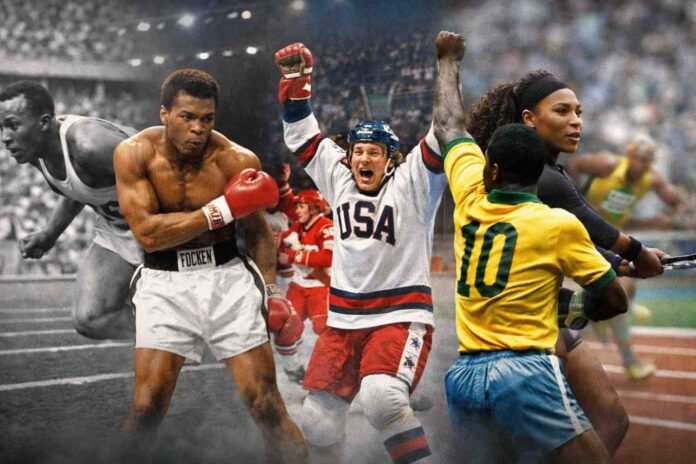
Sports have always been more than games. At their best, they become mirrors of society, reflections of human resilience, and catalysts for cultural change. Across decades and continents, certain events have transcended scoreboards and statistics, reshaping not only their sports but also history itself. These legendary sports moments that changed history didn’t just thrill fans—they altered perceptions, inspired movements, and redefined what was thought possible.
Below, we revisit the moments that truly changed the world.
Jesse Owens Defies Hate at the 1936 Berlin Olympics
In the shadow of Nazi propaganda, the 1936 Berlin Olympics were meant to showcase Aryan supremacy. Instead, they became the stage for one of the most powerful rebukes to racism in modern history.
Jesse Owens, an African American sprinter and long jumper, won four gold medals, humiliating Adolf Hitler’s racial ideology in front of a global audience. Owens’ victories didn’t end racism overnight, but they cracked a narrative that millions had been forced to accept. His performance remains one of the most symbolic athletic achievements of all time.
Why it changed history:
Owens proved that athletic excellence—and humanity—cannot be constrained by hate-driven ideology.
The “Miracle on Ice” Rewrites Cold War Symbolism
At the 1980 Winter Olympics, the United States hockey team was a group of college players facing the heavily favored Soviet Union, a team that had dominated international hockey for years.
Against all odds, the Americans won 4–3.
This wasn’t just a sports upset. During a tense Cold War period, the victory symbolized hope, belief, and the power of unity in the face of overwhelming force.
Why it changed history:
The Miracle on Ice became a cultural rallying point for a nation craving optimism and pride.
Jackie Robinson Breaks Baseball’s Color Barrier
When Jackie Robinson stepped onto the field for the Brooklyn Dodgers in 1947, he carried more than a bat and glove. He weighed a divided America.
Facing relentless abuse, threats, and isolation, Robinson responded with dignity and elite performance. His success paved the way for integration across professional sports and beyond.
Why it changed history:
Robinson’s courage accelerated the civil rights conversation and permanently changed American sports culture.
Muhammad Ali Stands Still—and Stands Tall
In 1967, heavyweight champion Muhammad Ali refused induction into the U.S. Army, citing religious beliefs and opposition to the Vietnam War. The cost was enormous: stripped of his title, banned from boxing, and vilified nationwide.
Years later, Ali returned, reclaimed greatness, and became a global icon of conviction and conscience.
Why it changed history:
Ali redefined what it meant to be an athlete—showing that moral courage can matter as much as physical dominance.
Pelé Makes Football a Global Language
Before Pelé, football was popular. After Pelé, it was universal.
Winning three World Cups with Brazil, Pelé brought flair, joy, and artistry to the sport. His influence helped transform football into the world’s most beloved game, bridging cultures and continents.
Why it changed history:
Pelé elevated football from competition to culture, shaping its global identity.
Billie Jean King Wins for Equality at the “Battle of the Sexes”
In 1973, Billie Jean King faced Bobby Riggs in a highly publicized tennis match designed to mock women’s sports. King’s straight-sets victory was watched by millions worldwide.
The match validated female athletes at a time when equality was still dismissed as fantasy.
Why it changed history:
King’s win became a turning point in the fight for gender equality in sports and pay equity.
Diego Maradona’s Hand—and Genius—of God
The 1986 World Cup quarterfinal between Argentina and England produced two of the most famous goals in sports history—both by Diego Maradona.
One was illegal. The other was pure brilliance.
Beyond controversy, the match carried political undertones following the Falklands War, turning football into a vessel for national pride and emotional release.
Why it changed history:
Maradona showed how sports can channel collective memory, pain, and identity.
Serena Williams Redefines Dominance and Representation
Serena Williams didn’t just win Grand Slams—she changed what dominance looked like.
Through power, longevity, and unapologetic confidence, Serena broke barriers around race, gender, and body image, inspiring generations who had never seen themselves reflected at the top of elite sport.
Why it changed history:
She expanded the definition of greatness and opened doors for future athletes worldwide.
Usain Bolt Makes Speed Look Effortless
When Usain Bolt slowed down to celebrate before finishing the 100 meters at the 2008 Olympics—and still set a world record—fans witnessed something unprecedented.
Bolt didn’t just run fast. He reimagined what sprinting could look like: joyful, charismatic, and globally magnetic.
Why it changed history:
Bolt turned track and field into must-watch entertainment and reset the limits of human speed.
Why Legendary Sports Moments Matter
These legendary sports moments that changed history endure because they remind us of something fundamental: sports are never just about winning. They are about resistance, progress, belief, and shared humanity.
Each moment on this list left fingerprints on culture, politics, and social consciousness—proof that a single game, race, or decision can echo for generations.
Final Thoughts
History isn’t only written by politicians and generals. Sometimes, it’s written by athletes under stadium lights, by quiet acts of courage, or by impossible victories that redefine belief.
As long as sports exist, there will be moments that challenge norms, inspire change, and unite the world—one unforgettable moment at a time.