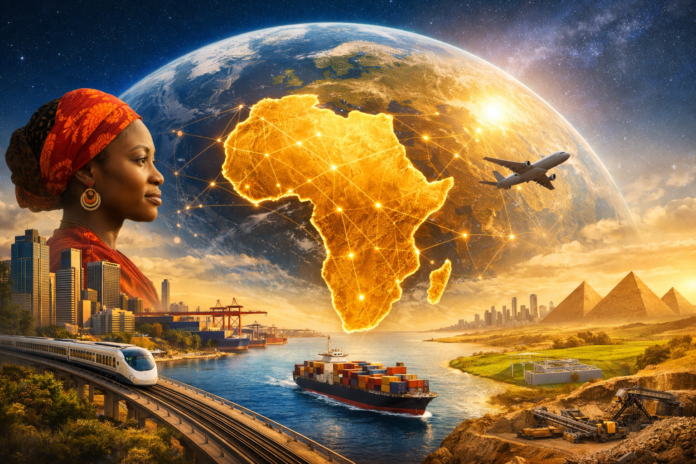
For decades, Africa was discussed mainly in terms of challenges rather than opportunities. That narrative is rapidly changing. Today, Africa’s rising influence in the global economy is no longer a future prediction—it is an unfolding reality. From fast-growing consumer markets and digital innovation to critical resources and geopolitical relevance, the continent is reshaping global economic dynamics in ways that investors, governments, and businesses can no longer ignore.
As the world navigates economic uncertainty, Africa is emerging as one of the most important regions for long-term growth and global stability.
Africa’s Economic Growth Is Gaining Global Attention
Africa is home to some of the fastest-growing economies in the world. While global growth has slowed in many developed nations, several African countries continue to post resilient GDP expansion, driven by domestic consumption, infrastructure development, and regional trade.
What sets Africa apart is not just growth speed, but growth potential. With over 1.4 billion people and a rapidly expanding middle class, Africa represents one of the largest untapped consumer markets globally. This demographic advantage positions the continent as a future engine of global demand.
A Young, Digital-First Population Fuels Innovation
One of the strongest drivers behind Africa’s rising influence in the global economy is its youthful population. More than 60% of Africans are under the age of 25, making it the youngest continent in the world.
This generation is:
- Tech-savvy and mobile-first
- Entrepreneurial by necessity and opportunity
- Rapidly adopting digital finance, e-commerce, and remote work.
African startups are attracting increasing global investment, particularly in fintech, health tech, agri-tech, and clean energy. Mobile banking innovations that originated in Africa are now studied and replicated worldwide.
Strategic Natural Resources Power the Global Supply Chain
Africa plays a critical role in supplying the resources that fuel modern economies. The continent holds a significant share of the world’s reserves of cobalt, lithium, rare earth elements, gold, and platinum—materials essential for electric vehicles, renewable energy, and advanced technology.
As the global transition toward clean energy accelerates, Africa’s resource base gives it growing leverage in international trade and geopolitics. Countries and corporations are increasingly seeking long-term partnerships with African nations to secure sustainable and ethical supply chains.
The Continental Free Trade Area of Africa Is Revolutionary
The African Continental Free Trade Area (AfCFTA) is one of the most ambitious economic projects in modern history. By creating a single market across more than 50 countries, AfCFTA aims to boost intra-African trade, industrialisation, and global competitiveness.
This agreement is already:
- Reducing trade barriers between African nations
- Encouraging regional manufacturing
- Making Africa more attractive to foreign investors
Over time, AfCFTA is expected to strengthen Africa’s bargaining power in global trade negotiations and reduce dependence on external markets.
Africa’s Growing Role in Global Politics and Diplomacy
Economic influence often leads to political influence—and Africa is increasingly asserting itself on the world stage. African nations are playing more active roles in international organisations, climate negotiations, and global security discussions.
With voting power in multilateral institutions and strategic geopolitical positioning, Africa is becoming a key partner for major global powers seeking stability, cooperation, and long-term economic alliances.
Infrastructure and Urbanisation Are Transforming the Continent
Massive investments in infrastructure are reshaping Africa’s economic landscape. New ports, railways, energy projects, and smart cities are improving connectivity and productivity across the continent.
Rapid urbanisation is creating economic hubs that support:
- Manufacturing and logistics
- Digital services and creative industries
- Regional and global trade
These developments are helping African economies move beyond raw material exports toward value-added production.
Challenges Remain, but Momentum Is Strong
Africa’s rise is not without obstacles. Issues such as climate vulnerability, debt pressure, governance gaps, and inequality still require attention. However, the narrative is shifting from limitation to solution-oriented progress.
What distinguishes Africa today is resilience. Governments, entrepreneurs, and communities are adapting faster, leveraging technology, regional cooperation, and global partnerships to overcome long-standing barriers.
Why Africa’s Rising Influence Matters to the World
Africa’s growing economic presence is not just important for the continent—it matters for the global economy as a whole. As traditional growth engines slow, Africa offers new opportunities for trade, innovation, labour, and investment.
For businesses, Africa represents future customers.
For investors, it offers long-term returns.
For the global economy, it provides balance, diversity, and growth.
Final Thoughts
Africa’s rising influence in the global economy marks one of the most significant economic shifts of the 21st century. The continent is no longer waiting on the sidelines—it is actively shaping global markets, innovation, and policy conversations.
Those who recognise Africa’s momentum today will be best positioned to benefit tomorrow. The world is changing, and Africa is no longer following global trends—it is helping define them.