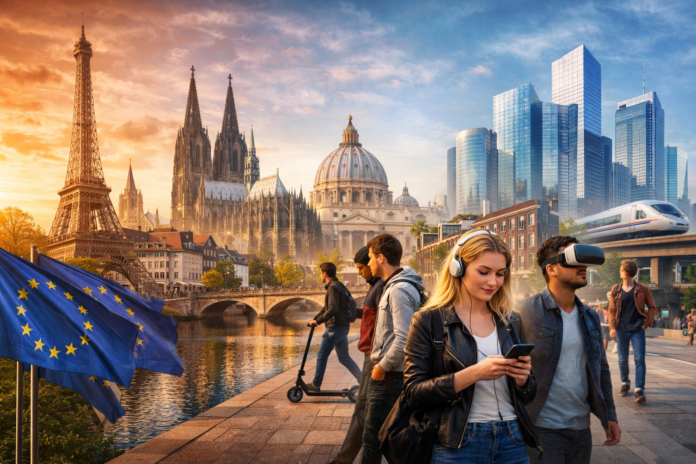
A quiet but constant process of cultural evolution shapes Europe’s modern societies. Rather than unfolding through sudden breaks with the past, Europe’s cultural change emerges through adaptation—where traditions, values, and social norms respond to economic shifts, technological progress, migration, and political transformation. Understanding this evolution offers insight into how Europe balances heritage with innovation in an increasingly interconnected world.
From Historical Roots to Contemporary Identity
European culture has always been layered. Ancient philosophies, religious traditions, Renaissance humanism, Enlightenment ideals, and industrial modernity have each left lasting imprints. Today’s European societies do not discard these foundations; instead, they reinterpret them.
Democracy, human rights, and individual freedom—concepts deeply rooted in European history—are now expressed in more inclusive and pluralistic ways. Modern Europe places greater emphasis on equality, social justice, and personal autonomy, reflecting lessons learned from past conflicts and social struggles.
Globalization and Cultural Exchange
Globalization has accelerated cultural evolution across Europe. Open borders, digital communication, and global trade have intensified cultural exchange, reshaping lifestyles, tastes, and identities.
Food, fashion, music, and language now reflect a blend of local traditions and global influences. European cities have become cultural crossroads where diverse communities coexist, interact, and influence mainstream culture. This fusion does not erase local identity; instead, it often strengthens it by encouraging societies to define what makes them distinct in a global context.
Migration and Multicultural Societies
Migration has been one of the most significant drivers of cultural evolution in Europe’s modern societies. Post-war labor migration, refugee movements, and EU mobility have diversified populations across the continent.
As a result, European culture today is more multicultural than ever before. Religious pluralism, multilingualism, and intercultural dialogue have become everyday realities. While integration has not been without challenges, it has also expanded cultural expression—visible in literature, cuisine, education, and the arts.
Technology and Changing Social Norms
Digital technology has transformed how Europeans communicate, work, and form relationships. Social media, streaming platforms, and online communities allow cultural trends to spread rapidly across borders.
This technological shift has influenced values as well. Younger generations often prioritize flexibility, mental well-being, and work-life balance over traditional measures of success. At the same time, debates around privacy, digital identity, and misinformation highlight the ongoing negotiation between innovation and ethical responsibility.
The Role of Education and Youth Culture
Education systems across Europe play a central role in cultural evolution. Modern curricula emphasize critical thinking, cultural awareness, and global citizenship, preparing younger generations for complex, multicultural societies.
Youth culture acts as a catalyst for change. Through music, fashion, activism, and digital creativity, young Europeans challenge established norms and introduce new perspectives. Their influence reshapes conversations around climate responsibility, gender equality, and social inclusion.
Preserving Tradition in a Modern World
Despite rapid change, Europe remains deeply connected to its traditions. Festivals, regional languages, crafts, and culinary heritage continue to thrive, often supported by cultural preservation initiatives.
Rather than existing in opposition to modernity, tradition increasingly coexists with innovation. Historic cities integrate sustainable infrastructure, and traditional art forms find new life through digital platforms. This balance ensures continuity while allowing culture to evolve naturally.
Political and Social Influences
Political developments also shape cultural evolution. European integration, debates over national identity, and responses to global crises influence how societies define themselves.
Movements advocating environmental sustainability, social equity, and democratic accountability reflect evolving cultural priorities. These shifts show how culture and politics remain deeply interconnected in Europe’s modern societies.
The Future of Cultural Evolution in Europe
Europe’s cultural evolution is an ongoing process rather than a finished outcome. As societies face challenges such as climate change, demographic shifts, and technological disruption, culture will continue to adapt.
What defines Europe’s modern societies is not uniformity, but the ability to integrate diversity while maintaining shared values. This dynamic balance positions Europe as a living example of how culture can evolve without losing its historical depth.
Conclusion
Cultural evolution in Europe’s modern societies reflects resilience, adaptability, and dialogue between past and present. Through globalization, migration, technology, and social change, European culture continues to redefine itself—remaining rooted in history while open to transformation. This ongoing evolution not only shapes Europe’s identity but also influences global cultural conversations in the 21st century.