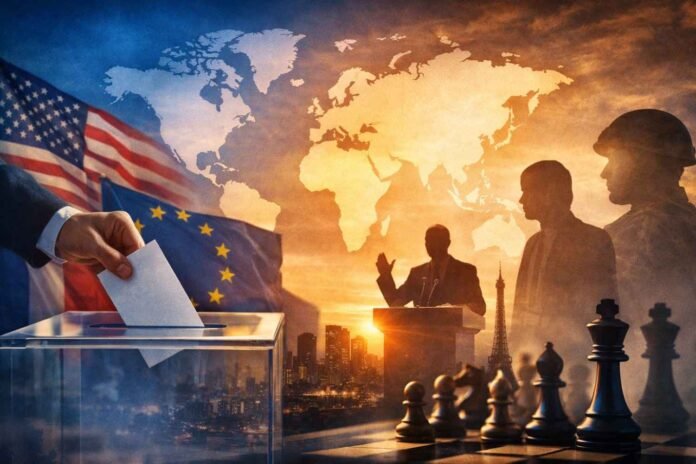
The global political landscape is undergoing one of its most transformative periods in modern history. From high-stakes national elections to unexpected leadership changes, power is shifting in ways that are redefining governance, diplomacy, and global influence. Elections are no longer isolated domestic events; they are catalysts that reshape international alliances, economic priorities, and ideological balances across regions.
Understanding how elections drive leadership transitions—and how those transitions trigger broader power shifts—has become essential for policymakers, businesses, and citizens alike.
The New Era of Elections: More Than a Democratic Ritual
Elections today function as geopolitical signals. Voters are not only choosing leaders; they are expressing dissatisfaction, fear, hope, and resistance to established systems. Rising inflation, migration pressures, climate change, and digital misinformation have elevated elections into moments of global consequence.
In many countries, traditional political parties are losing ground to reformist or populist movements. This trend reflects a broader demand for leaders who promise rapid change, stronger national sovereignty, or alternative economic models.
As a result, election outcomes increasingly send shockwaves beyond national borders.
Leadership Transitions and the Fragility of Political Stability
Leadership changes can either stabilize or destabilize a nation, depending on how power is transferred. Peaceful transitions reinforce institutional trust, while contested or manipulated elections often deepen polarization.
Across different regions, leadership shifts reveal stark contrasts:
- Established democracies are grappling with voter fatigue and declining trust in institutions.
- Emerging democracies face pressure to balance reform with political continuity.
- Authoritarian systems use elections strategically to legitimize power rather than distribute it.
These dynamics influence how leaders govern once elected—whether through consensus-building or consolidation of authority.
Power Shifts Across Regions: A Global Pattern Emerges
North America and Europe: Fragmentation and Realignment
Western democracies are experiencing ideological fragmentation. Elections increasingly result in coalition governments or narrow victories, limiting leaders’ ability to implement sweeping reforms. This has led to policy inconsistency and frequent leadership turnover.
At the same time, political polarization has turned elections into referendums on identity, globalization, and democratic norms, accelerating shifts in both domestic and foreign policy.
Asia: Strategic Leadership and Long-Term Influence
In Asia, leadership transitions often emphasize continuity and strategic planning. Elections in major economies influence regional security, trade routes, and technological competition. Even subtle leadership changes can alter power balances in the Indo-Pacific region.
Here, elections are closely watched not just for who wins, but for how leadership priorities evolve.
Africa and Latin America: Reform, Resistance, and Renewal
Many countries in Africa and Latin America are using elections as tools for renewal after periods of economic hardship or political unrest. Leadership changes frequently signal public rejection of corruption, inequality, or external dependency.
However, these power shifts can be fragile. Without strong institutions, electoral victories do not always translate into lasting reform.
The Role of Technology in Modern Elections
Digital platforms have fundamentally changed how elections influence leadership and power. Social media shapes public opinion at unprecedented speed, while data analytics and AI-driven campaigning redefine voter engagement.
At the same time, concerns about election interference, misinformation, and cyber influence have become central to discussions about sovereignty and democratic legitimacy.
Technology has turned elections into information battlegrounds—where power is contested not only at the ballot box but online.
Global Consequences of Leadership Change
When leadership changes, the impact is rarely contained within national borders. Elections can trigger:
- Shifts in trade agreements and economic partnerships
- Changes in defense alliances and military posture
- Reversals in climate, energy, and immigration policy
- Realignment of diplomatic priorities
This interconnectedness means that a single election can reshape regional or even global power structures.
What the Future Holds for Elections and Power
Looking ahead, elections will continue to serve as pressure points in a rapidly changing world. Demographic shifts, economic uncertainty, and climate stress will further test leadership models.
Successful leaders will be those who combine legitimacy, adaptability, and institutional strength. Nations that fail to manage power transitions peacefully risk long-term instability and declining global influence.
Conclusion: Elections as the Engine of Global Change
Elections, leadership, and power shifts around the world are no longer separate political phenomena—they are deeply interconnected forces shaping the future of global order. Every vote contributes to a broader narrative about who holds power, how it is exercised, and whose interests are prioritized.
As the world enters an era defined by uncertainty and transformation, understanding these dynamics is not optional. It is essential for navigating the political, economic, and social realities of the 21st century.