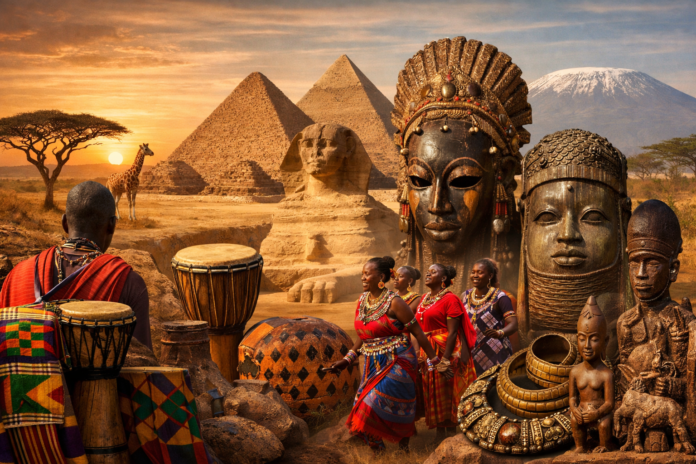
Africa is not a single story, a single culture, or a single identity. It is a vast, living mosaic of languages, traditions, beliefs, and histories that span thousands of years. Exploring Africa’s cultural diversity and rich heritage means stepping into a continent where the past and present coexist—where ancient rituals influence modern life, and where identity is deeply rooted in community, ancestry, and land.
From the deserts of North Africa to the rainforests of Central Africa and the savannas of the south, Africa’s cultural landscape is as diverse as its geography. Understanding this diversity is essential not only for travelers and scholars but for anyone seeking a more complete picture of the world.
Africa: A Continent of Many Worlds
Africa is the most culturally varied continent on Earth, home to more than 2,000 languages and more than 3,000 ethnic groups. Each region holds its own worldview, social structures, art forms, and spiritual systems.
North Africa: A Crossroads of Civilizations
North Africa’s culture reflects centuries of interaction between African, Arab, Mediterranean, and Islamic civilizations. Countries like Egypt, Morocco, and Tunisia showcase:
- Ancient architectural marvels
- Arabic and Amazigh (Berber) traditions
- Islamic art, calligraphy, and scholarship
The legacy of the Pharaohs, Roman influence, and Islamic dynasties still shapes daily life, cuisine, and social customs.
West Africa: Rhythm, Oral History, and Community
West Africa is globally renowned for its storytelling traditions, music, and vibrant social life. Here, history is often preserved through oral tradition, passed down by griots—respected historians and musicians.
Cultural highlights include:
- Complex drum rhythms and dance traditions
- Colorful textiles like kente and adire
- Festivals celebrating harvest, ancestry, and spiritual beliefs
Countries such as Ghana, Nigeria, Senegal, and Mali remain cultural powerhouses, influencing music, fashion, and philosophy worldwide.
East Africa: Heritage Shaped by Trade and Nature
East Africa’s cultural diversity has been shaped by centuries of trade along the Indian Ocean. Swahili culture, in particular, reflects a blend of African, Arab, and Asian influences.
Notable features include:
- Swahili language and coastal architecture
- Nomadic traditions of communities like the Maasai
- Strong connections between land, cattle, and identity
This region offers a powerful example of how environment and culture evolve together.
Central Africa: Deep Roots and Spiritual Traditions
Central Africa is known for its rich spiritual systems and expressive art forms. Masks, sculptures, and ceremonial objects often carry symbolic meanings tied to ancestors, nature, and the spirit world.
Cultural expression here emphasizes:
- Ancestral reverence
- Community-based living
- Art as a spiritual and social tool
These traditions continue to influence contemporary African art and global museums.
Southern Africa: Tradition Meets Modern Expression
Southern Africa blends ancient customs with modern innovation. From the Zulu and Xhosa heritage of South Africa to the San people’s ancient rock art, this region reflects resilience and adaptation.
Cultural elements include:
- Initiation rites and oral storytelling
- Traditional beadwork and symbolism
- A strong emphasis on Ubuntu—community and shared humanity
Language: The Soul of African Identity
Language is central to Africa’s cultural heritage. Many African languages are deeply expressive, designed to convey emotion, respect, and social relationships—not just information.
Multilingualism is common across the continent, with people often speaking:
- A local ethnic language
- A regional lingua franca
- A colonial or international language
This linguistic richness strengthens cultural preservation while enabling global connection.
Art, Music, and Dance: Living Cultural Expressions
African art is not static—it is lived, worn, danced, and performed.
- Music serves social, spiritual, and political roles.
- Dance communicates identity, emotion, and history.
- Visual art often tells stories or honors ancestors.
Modern genres like Afrobeat, Amapiano, and African hip-hop continue this legacy, blending tradition with contemporary creativity and reaching global audiences.
Religion and Spirituality: Deeply Interwoven with Daily Life
African spirituality is diverse and deeply rooted in respect for ancestors, nature, and unseen forces. While Christianity and Islam are widely practiced, many communities maintain indigenous belief systems alongside them.
Rather than replacing tradition, these religions often coexist—creating unique spiritual identities that reflect Africa’s adaptability and depth.
Preserving Africa’s Rich Cultural Heritage
Globalization and urbanization pose challenges to cultural preservation, but Africa is actively protecting its heritage through:
- Cultural festivals and heritage sites
- Indigenous language revitalization
- Community-led education and storytelling
Younger generations are reclaiming traditions through fashion, music, film, and digital platforms—proving that African culture is not fading, but evolving.
Why Exploring Africa’s Cultural Diversity Matters
Understanding Africa’s cultural diversity challenges stereotypes and incomplete narratives. It highlights Africa not as a single experience, but as a continent of innovation, wisdom, and resilience.
By exploring Africa’s rich heritage, we gain:
- A deeper appreciation for human creativity
- Insight into sustainable living and community values
- A more honest, balanced global perspective
Final Thoughts
Exploring Africa’s cultural diversity and rich heritage is an invitation to look beyond headlines and assumptions. It is a journey into humanity’s shared roots—where stories, traditions, and identities continue to shape the future.
Africa is not only where humanity began. It is where culture continues to thrive, adapt, and inspire the world.