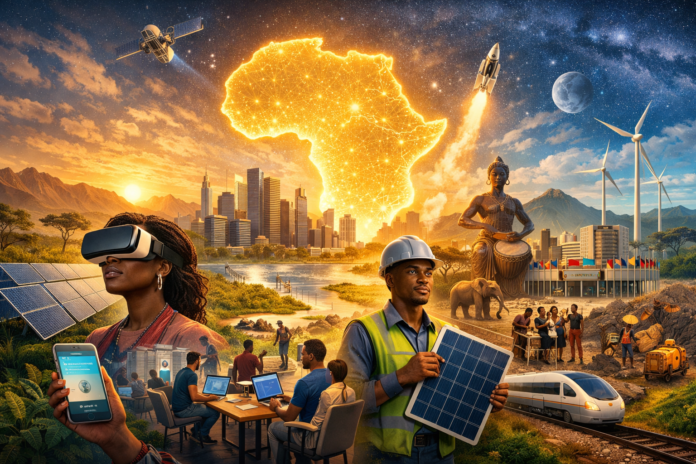
For centuries, Africa has been discussed mainly in terms of its past—its ancient civilizations, colonial history, and struggles for independence. Today, that narrative is changing fast. Africa is no longer just a region to watch; it is a region actively shaping the future of the world.
From technology and energy to culture, geopolitics, and demographics, Africa’s influence is accelerating in ways that will define the 21st century. Understanding how Africa is shaping the future of the world is no longer optional—it is essential.
Africa’s Demographic Power: The World’s Youngest Continent
One of Africa’s most powerful advantages is its people.
One in four people on the planet will be African by 2050. More importantly, Africa has the youngest population in the world, with a median age under 20 in many countries. While much of Europe, East Asia, and North America are grappling with aging populations and shrinking workforces, Africa is entering its prime.
This demographic shift will influence:
- Global labor markets
- Consumer demand
- Innovation and entrepreneurship
- Political power on the world stage
As global companies search for future consumers and talent, Africa is becoming impossible to ignore.
The Rise of African Innovation and Technology
Africa is often underestimated in discussions about technology, yet it is one of the world’s most dynamic innovation environments.
Leapfrogging Traditional Systems
Rather than following the same development path as the West, many African countries are leapfrogging outdated systems:
- Mobile banking replaced traditional banking infrastructure.
- Digital IDs are expanding financial inclusion.
- Telemedicine is filling healthcare gaps.
Mobile money platforms like M-Pesa didn’t just transform Africa—they inspired financial inclusion models worldwide.
A Growing Tech Ecosystem
Cities like Lagos, Nairobi, Cape Town, Kigali, and Accra are emerging as global tech hubs. African startups are solving problems at scale, from climate resilience to logistics and fintech, often with fewer resources and greater efficiency.
This innovation mindset is shaping how the world approaches:
- Digital finance
- Inclusive technology
- Low-cost, high-impact solutions
Africa and the Future of Global Energy
As the world races toward cleaner energy, Africa sits at the center of the solution.
Renewable Energy Potential
Africa has:
- 60% of the world’s best solar resources
- Vast wind corridors
- Untapped hydroelectric capacity
- Critical minerals for clean technology
Countries like Morocco, Kenya, and South Africa are already investing heavily in renewables, positioning Africa as a future energy supplier, not just a consumer.
Green Industrialization
Africa’s industrial growth is happening at a moment when sustainability matters. That means the continent has a unique chance to build green-first economies, shaping global climate outcomes rather than reacting to them.
Africa’s Expanding Role in Global Geopolitics
Africa’s influence in global politics is growing steadily.
With 54 countries, Africa represents the largest voting bloc at the United Nations. As global power shifts away from a unipolar world, African nations are becoming key players in:
- International diplomacy
- Trade negotiations
- Peacekeeping efforts
- South–South cooperation
Africa is no longer aligned automatically with any single global power. Instead, it is asserting strategic independence, forming partnerships based on mutual interest rather than historical dependency.
Cultural Influence: Africa’s Global Soft Power
Africa is shaping the future of the world not only through economics and politics, but through culture.
Music, Fashion, and Film
Afrobeats dominates global charts. African designers influence international fashion weeks. Nollywood produces more films annually than Hollywood.
This cultural expansion:
- Redefines global aesthetics
- Challenges outdated stereotypes
- Creates new global markets
African culture is no longer “emerging”—it is mainstream.
Storytelling and Identity
As African creators tell their own stories, global narratives are shifting. The world is beginning to see Africa not as a single story of hardship, but as a continent of complexity, creativity, and ambition.
Africa and International Trade’s Future
The African Continental Free Trade Area (AfCFTA) is one of the most ambitious economic projects in modern history.
When fully implemented, it will:
- Create the world’s largest free trade zone in terms of the number of countries.
- Boost intra-African trade
- Strengthen Africa’s position in global supply chains.
As global trade becomes more regionalized, Africa’s internal market—worth trillions of dollars—will be a major driver of global growth.
Education, Talent, and the Global Workforce
Africa’s future impact depends heavily on education and skills, and progress is accelerating.
- Universities are expanding rapidly.
- Digital learning is reaching remote areas.
- African professionals are shaping global industries, from medicine to AI.
The African diaspora already plays a major role in global innovation. As opportunities increase at home, Africa’s talent will increasingly shape the world from within the continent, not just abroad.
Challenges That Will Define Global Outcomes
Acknowledging Africa’s role in shaping the future of the world does not mean ignoring its challenges.
Issues such as:
- Infrastructure gaps
- Political instability in certain regions
- Climate vulnerability
- Inequality
Are real. However, how Africa addresses these challenges will influence global solutions, especially as other regions face similar pressures.
Africa is not just facing the future—it is testing solutions for the world.
Why Africa’s Future Is the World’s Future
The biggest mistake global leaders, investors, and institutions can make is viewing Africa as a peripheral player. The reality is clear:
- Africa will drive population growth.
- Africa will shape climate outcomes.
- Africa will influence global culture.
- Africa will redefine economic growth models.
To understand how Africa is shaping the future of the world is to know where the world itself is heading.
Final Thoughts
Africa is not “the next frontier.” It is the current engine of global transformation.
The decisions made across African cities, governments, startups, and communities today will ripple across the planet for generations. Those who recognize this early—whether policymakers, entrepreneurs, or citizens—will be better prepared for the future that is already unfolding.
Africa is not catching up to the world.
Africa is helping to lead it.