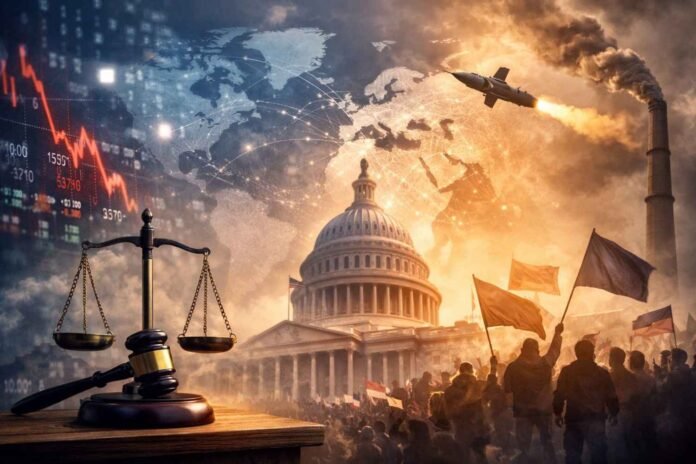
Modern politics operates in a climate unlike any other in history. Governments today face a complex web of economic uncertainty, technological disruption, social fragmentation, and global instability—all unfolding at unprecedented speed. Traditional political frameworks, once designed for slower-moving societies, are increasingly strained by the realities of a hyperconnected world.
Understanding the challenges facing governments today is essential not only for policymakers but also for citizens seeking to make sense of political decisions that affect everyday life. From managing public trust to navigating geopolitical tensions, modern politics demands adaptability, transparency, and resilience.
The Crisis of Public Trust in Government
One of the most pressing challenges in modern politics is the erosion of public trust. Across many democracies, citizens are increasingly skeptical of political institutions, elected officials, and even the democratic process itself.
This distrust is driven by several factors: corruption scandals, unfulfilled campaign promises, political polarization, and a perception that governments prioritize elite interests over public welfare. Social media has amplified this skepticism by accelerating the spread of misinformation and emotional narratives that often overshadow nuanced debate.
When trust declines, governing becomes harder. Policies—no matter how well-designed—face resistance, protests, or outright rejection. Restoring credibility now requires more than rhetoric; it demands consistent accountability, ethical leadership, and meaningful public engagement.
Economic Pressures in a Globalized World
Economic management has always been central to governance, but modern politics has made it far more complex. Governments must balance domestic priorities with global economic forces they cannot fully control.
Inflation, rising public debt, supply chain disruptions, and widening income inequality challenge both developed and developing nations. Economic shocks—whether caused by pandemics, wars, or financial crises—spread rapidly across borders, limiting national governments’ ability to respond independently.
At the same time, voters expect immediate results. This tension between long-term economic stability and short-term political survival often leads to policy compromises that satisfy neither economists nor the public.
Political Polarization and Social Fragmentation
Another defining feature of modern politics is deepening political polarization. Ideological divisions have become sharper, more personal, and more resistant to compromise.
In many countries, political identity is now closely tied to cultural, religious, or social values, turning policy disagreements into moral battles. This makes bipartisan cooperation increasingly rare and legislative gridlock more common.
Governments struggling with polarization face a paradox: democratic debate thrives on disagreement, yet excessive division weakens institutions and slows decision-making. Finding ways to encourage constructive dialogue without suppressing dissent is one of the most delicate challenges leaders face today.
Technology, Media, and the Governance Dilemma
Technology has transformed politics faster than laws can keep up. Social media platforms shape public opinion, influence elections, and challenge traditional media’s role as a gatekeeper of information.
Governments must regulate digital spaces without undermining free speech—a task easier said than done. Election interference, data privacy violations, and algorithm-driven misinformation pose serious risks to democratic stability.
At the same time, digital tools offer opportunities for transparency, e-governance, and citizen participation. The challenge lies in using technology to strengthen democracy rather than allowing it to erode institutional authority.
Global Challenges Beyond National Borders
Modern governments no longer operate in isolation. Climate change, migration, pandemics, and security threats transcend borders, requiring international cooperation that often clashes with domestic political pressures.
Climate policy, for example, demands long-term commitment and economic sacrifice, yet electoral cycles reward short-term gains. Migration policies raise humanitarian concerns while fueling political backlash at home. Foreign conflicts can destabilize entire regions, forcing governments to respond to crises they did not create.
Balancing national interests with global responsibility is one of the defining tensions of modern politics.
Leadership in an Age of Constant Scrutiny
Political leadership today unfolds under relentless public and media scrutiny. Every statement, decision, or misstep can be recorded, shared, and criticized within minutes.
While transparency is essential, constant exposure can discourage bold decision-making. Leaders may prioritize popularity over effectiveness, avoiding necessary but unpopular reforms.
Strong governance now requires emotional intelligence, communication skills, and the ability to lead amid uncertainty—qualities that go beyond traditional political experience.
The Path Forward for Modern Governments
Despite these challenges, modern politics also presents opportunities. Governments that embrace transparency, invest in civic education, and foster inclusive dialogue can rebuild public confidence.
Adaptive policymaking—grounded in evidence rather than ideology—offers a way forward in a rapidly changing world. Collaboration between governments, private institutions, and civil society is increasingly essential for addressing complex problems.
Ultimately, the success of modern governance depends not only on political leaders but on informed, engaged citizens willing to participate in democratic processes with critical thinking and empathy.
Conclusion
Modern politics reflects the realities of a world in transition. Governments today face unprecedented challenges that test institutional strength, leadership capacity, and democratic values. While the obstacles are significant, they are not insurmountable.
By acknowledging these challenges honestly and addressing them with innovation, accountability, and cooperation, governments can navigate the complexities of modern politics and build more resilient societies for the future.